

Let’s take a moment for honest reflection:
How often have you kept your phone in your front pocket or placed it on your lap during a long drive or while working, assuming it posed no harm?
This behavior is incredibly common. For decades, we’ve been assured that non-ionizing radiation, such as that produced by smartphones, doesn’t have the power to harm our DNA. Unless we’re dealing with X-rays or gamma rays, we’ve been told, our genetic material is safe. But that assumption is now being challenged.
However, mounting evidence is forcing us to challenge that assumption.
A Massive New Study Just Flipped the Script
In August 2025, a comprehensive review published in Frontiers in Public Health analyzed over 500 peer-reviewed studies exploring the effects of wireless radiation on genetic health. The results were startling:
More than half of the studies revealed statistically significant DNA damage from wireless radiation. Even more concerning, many of these effects occurred well below current ‘safety’ limits.
That includes exposure from:
-
Mobile phones
-
Wi-Fi and Bluetooth devices
-
Smart meters and routers
Most of the damage was observed in reproductive cells and brain cells, meaning your fertility and cognitive function could be silently affected.
Isn’t Wireless Radiation Supposed to Be Safe?
That has been the official narrative for decades:
-
Wireless radiation is non-ionizing
-
Non-ionizing radiation doesn’t have enough energy to break DNA strands directly
-
Therefore, it’s safe
But this logic no longer holds up. While it may not break DNA directly, this form of radiation appears to cause oxidative stress, a damaging process driven by free radicals that leads to genetic damage over time.
It’s less of a direct attack and more of a slow, biological erosion.
The Myth of Safe Limits
Current global safety standards focus only on preventing tissue heating. They ignore long-term exposure, subtle biological effects, and the cumulative impact of oxidative stress.
In fact, over 58% of the studies showing DNA damage reported effects within the so-called ‘safe’ limits defined by the International Commission on Non-Ionizing Radiation Protection (ICNIRP).
This should raise immediate concerns.
What Kind of DNA Damage Are We Talking About?
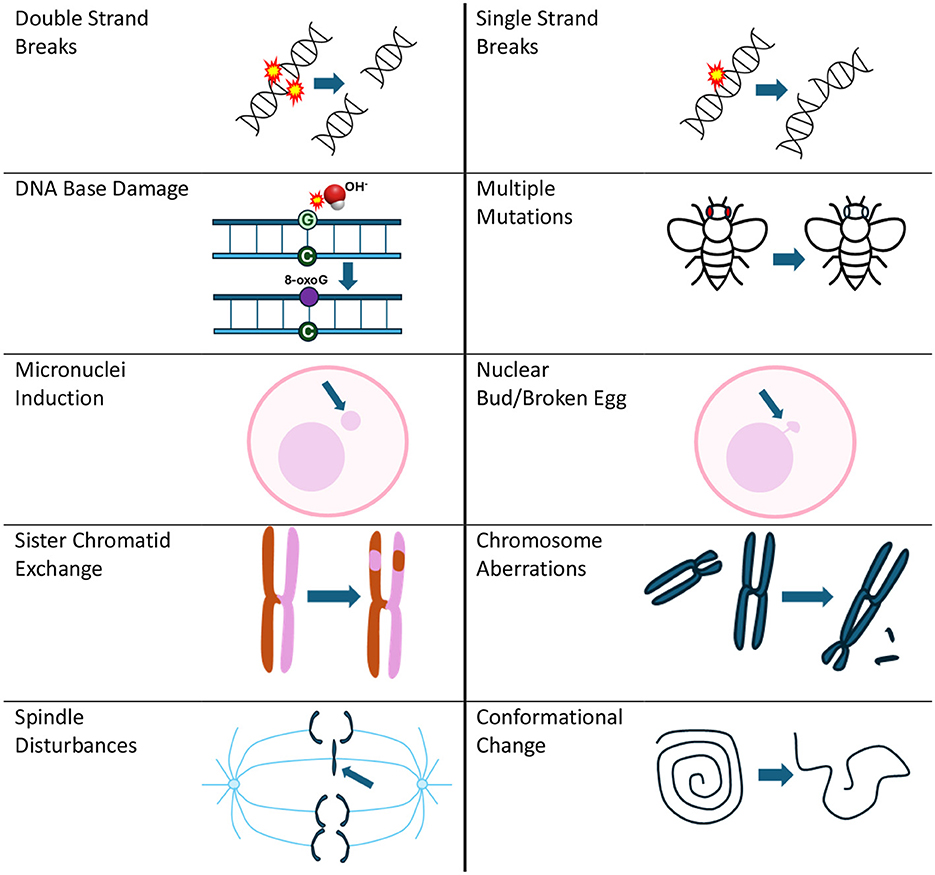
The review outlined multiple types of genetic harm:
-
Single-strand and double-strand DNA breaks
-
DNA base damage leading to point mutations
-
Micronuclei formation indicating chromosomal instability
-
Spindle disturbances affecting cell division
-
Structural changes to DNA
While the body has mechanisms to repair DNA, they aren’t foolproof. When damage outpaces repair, the risks increase for cancer, infertility, and neurodegeneration.
The Cancer Connection
Genetic damage is a known precursor to tumor development. Wireless radiation has been linked to elevated risks of:
-
Glioblastoma (brain cancer)
-
Acoustic neuromas (nerve sheath tumors)
-
Thyroid and prostate cancers
These aren’t distant risks. Many men carry phones in their pockets or use wireless earbuds for hours daily—placing vital organs in direct proximity to low-level radiation.
What About Study Quality?
Critics often claim that only poor-quality studies show harm. However, even when researchers limited their analysis to high-quality studies using rigorous controls, nearly half still showed genetic effects.
Interestingly, the funding source had a stronger impact on study outcomes than the research quality itself:
-
Industry-funded studies frequently reported no harm
-
Independent studies consistently found genetic damage
It’s a pattern we’ve seen before—with tobacco, pharmaceuticals, and now wireless technology.
Not All Cells Are Equally Affected
The following cell types showed the highest vulnerability:
-
Sperm cells: 74% of studies found DNA damage
-
Testicular cells: 80%
-
Ovarian cells: 80%
-
Brain cells: 76%
Even blood and skin cells—traditionally seen as more resilient—showed damage with longer exposure times.
The Real Exposure Looks Worse
Many laboratory experiments use simplified radiation sources, but real-world exposure involves:
-
Pulsed and modulated signals
-
Continuous variability
-
Cumulative daily exposure
Devices like phones and routers, tested in real-life conditions, were more likely to cause DNA damage than simulations.
This suggests that real-world risks may be even greater than those revealed by controlled studies.
There’s a Pattern Here
The studies showed a U-shaped dose-response curve:
-
Short and long exposures produced damage
-
Medium exposures sometimes showed temporary adaptation
But chronic exposure seems to overwhelm these adaptive mechanisms over time.
Free Radicals Are the Smoking Gun
The leading theory behind the damage is oxidative stress, which occurs when the body’s antioxidant defenses are overwhelmed by excessive free radical production.
Wireless radiation appears to:
-
Disrupt mitochondrial health
-
Elevate free radicals
-
Suppress antioxidant activity
-
Increase inflammation
Biomarkers such as 8-OHdG and 8-oxo-dG, both associated with DNA oxidation and cancer, were elevated in exposed subjects.
What You Can Do
You don’t need to reject modern life. But you do need to reduce unnecessary exposure and build resilience.
Start with simple changes:
-
Use speakerphone or wired headsets
-
Keep devices away from your body
-
Turn off Wi-Fi and Bluetooth when not needed
-
Avoid sleeping near wireless devices
-
Hardwire computers when possible
-
Use EMF protection devices, such as those from Aires Tech, which utilize patented technology to neutralize chaotic electromagnetic fields. Backed by third-party research and trusted by professional athletes and health practitioners, Aires products are designed to support the body’s natural balance in today’s wireless-heavy world.
-
Increase antioxidant intake to counteract oxidative stress
Why I Trust Aires
When it comes to protecting genetic integrity, Aires Tech stands out. Their devices don’t block radiation—they restructure electromagnetic fields into more biologically harmonious patterns. The result is improved cellular resilience and reduced stress responses.
Their products are supported by peer-reviewed research and widely used by professionals who understand the risks of modern technology. I use them daily and consider them an essential part of my health routine.
Why This Matters for Men’s Health
This issue deserves attention.
DNA damage in sperm is not just a fertility concern—it may affect the health of future generations. Likewise, the brain is especially vulnerable to oxidative stress, which may contribute to fatigue, anxiety, and long-term cognitive decline.
We often emphasize testosterone, strength training, and nutrition. But none of it matters if we ignore a foundational threat to our cellular health.
Final Thoughts: Be Proactive
The guidelines for radiation safety were written in 1996, long before smartphones, 5G networks, or wireless earbuds became common.
The researchers behind this new review are urging policymakers to implement stricter safety protocols and push for innovation in device design.
Until that happens, you are your own best defense.
Take proactive steps to reduce exposure and support your body’s resilience.
Your health, your DNA, and your legacy depend on it.